
A comparison of a 1970's kitchen versus today
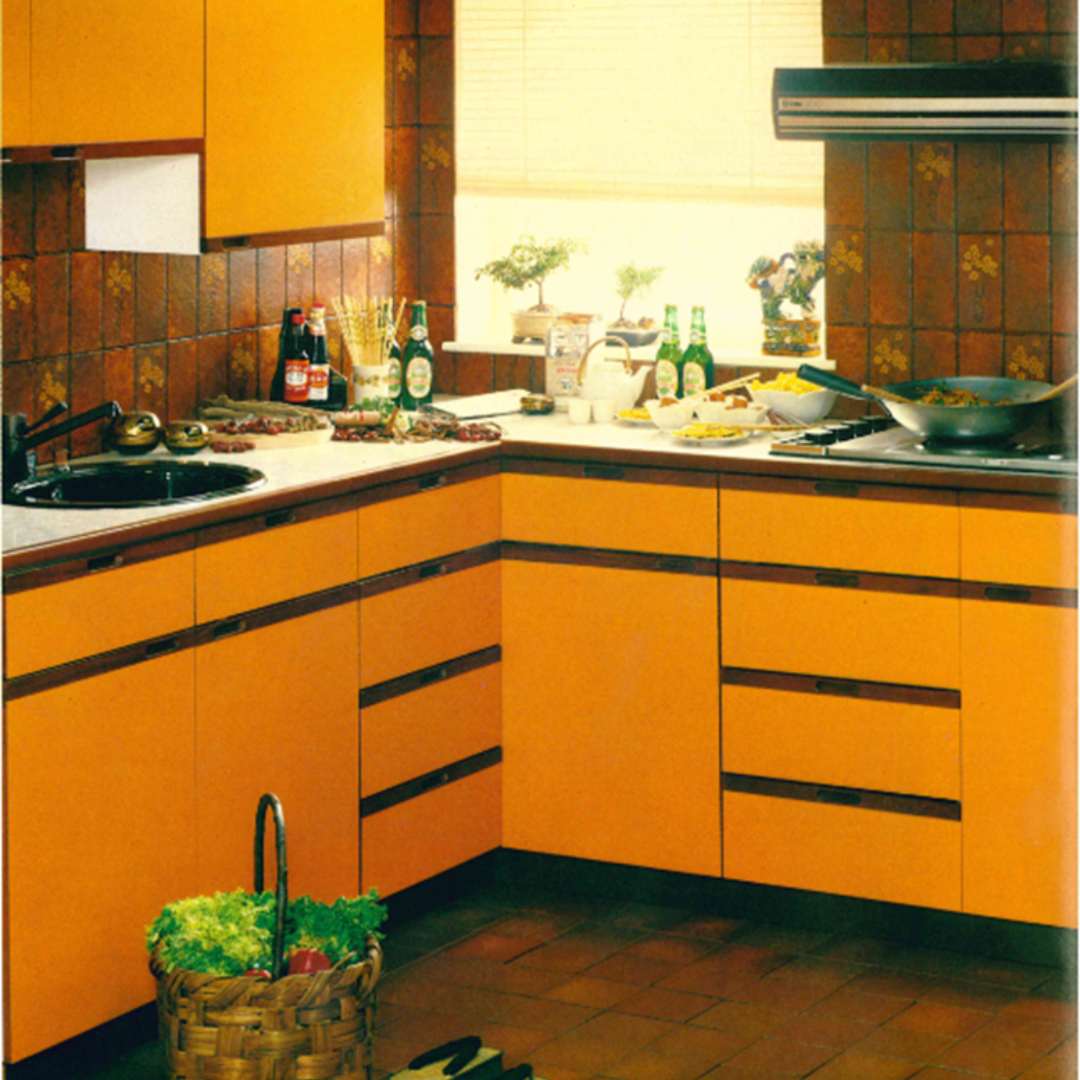
1970's kitchen versus today
We thought it would be fun to look back at some Ellis kitchens from the 1970’s and look at what’s changed and what really hasn’t compared to the kitchens of today.
Afterall, these kitchens are nearly 50 years old, so let’s have a look at the key elements making up the overall kitchen design and what’s changed dramatically and what’s stood the test of time.
Colour
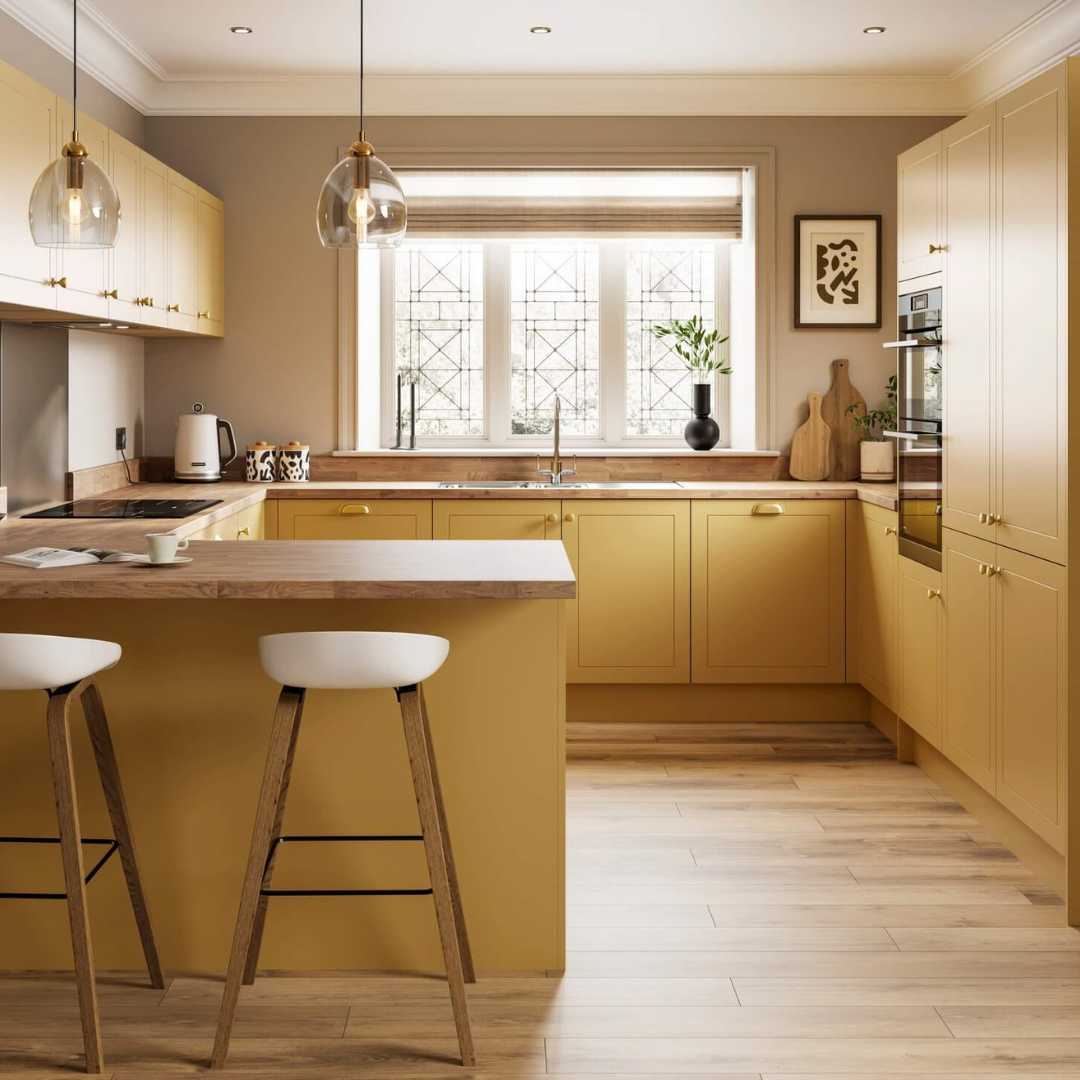
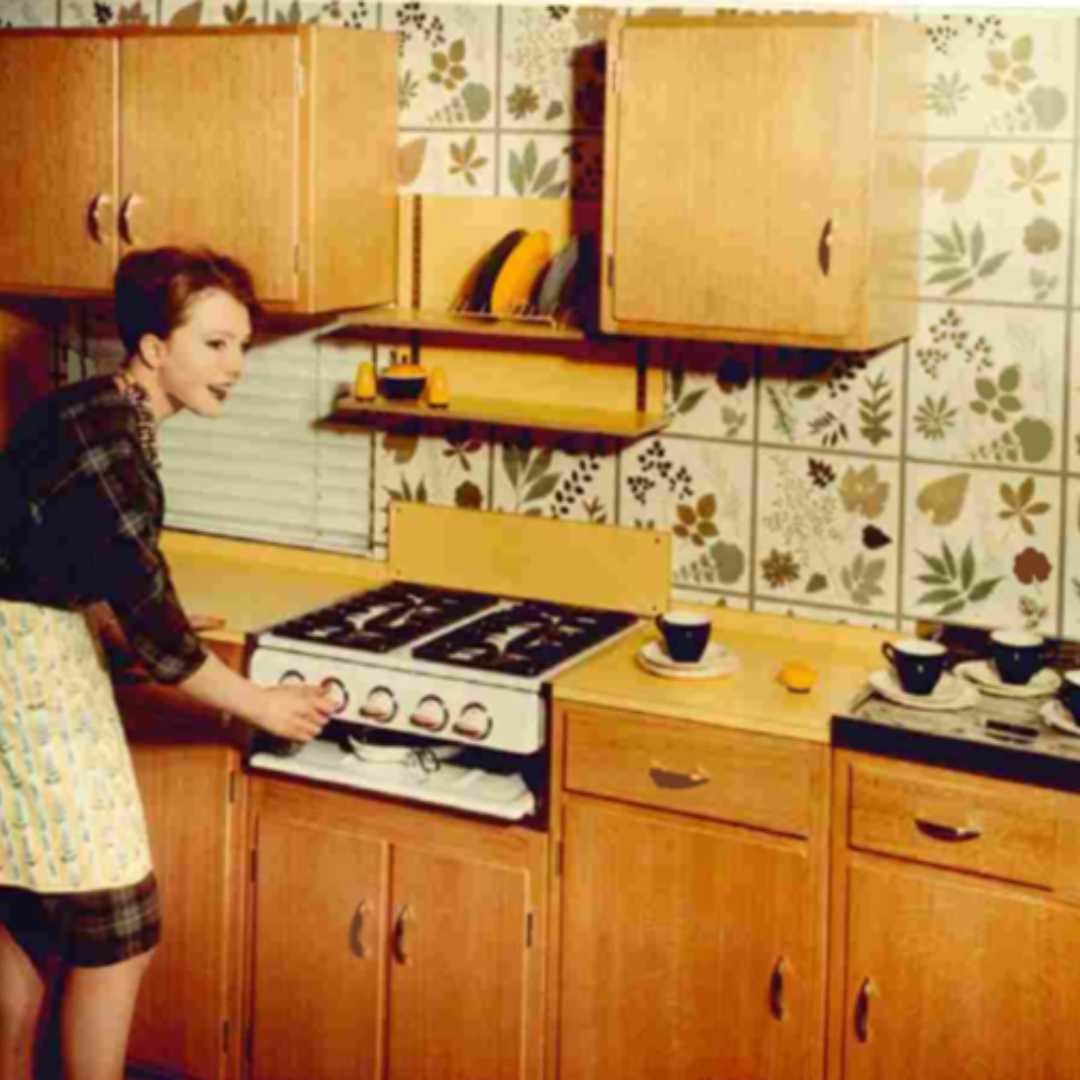
The first thing which strikes you about this 1970’s Ellis kitchen is the colour…ORANGE, which is so very 70’s.
We really don’t see many orange kitchens these days but people certainly are being braver with colour and our paint to order palette certainly contains some stronger statement colours such as our very own Tuscan Yellow.
Door Materials
1970’s kitchen doors consisted of a lot of melamine faced chipboard with a laminate front and a lot of veneered finishes.
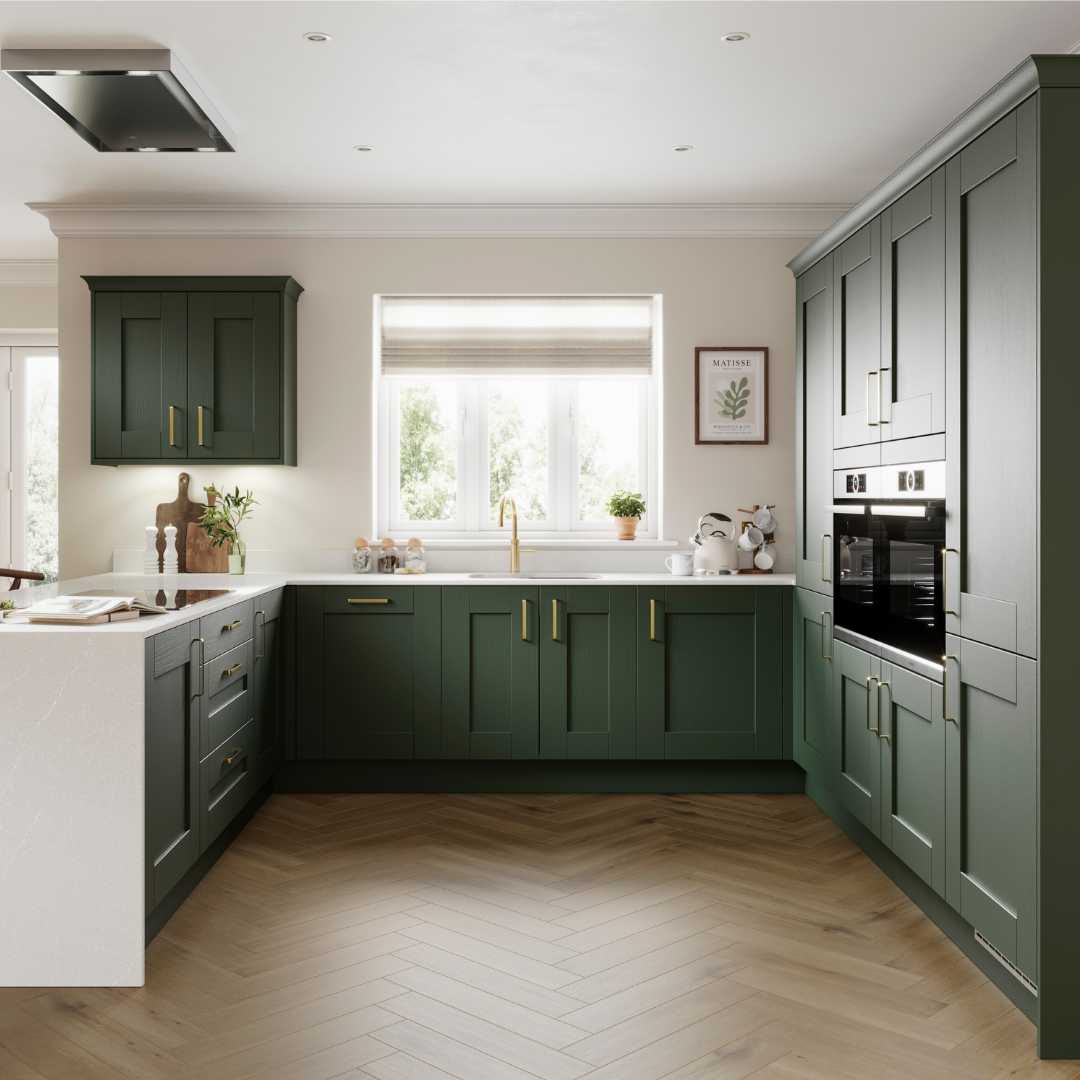
Today a large part of the market are foil wrapped doors which are made by wrapping a thin layer of plastic (vinyl) or paper mixed with resin (foil) around a medium-density fibreboard (MDF) core. This process creates a smooth, seamless finish that can mimic the look of painted or natural wood surfaces such as our New England range shown below.
Handles
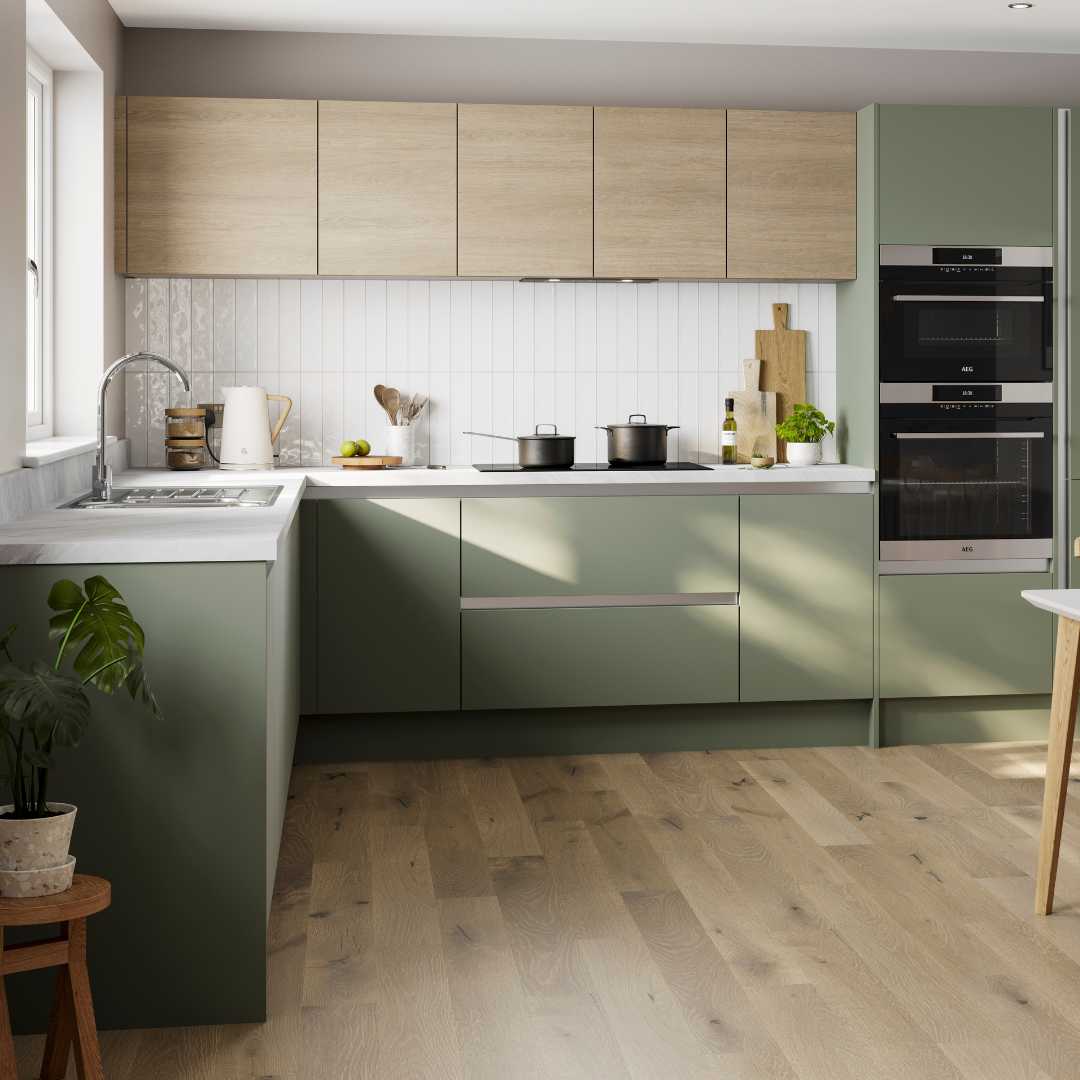
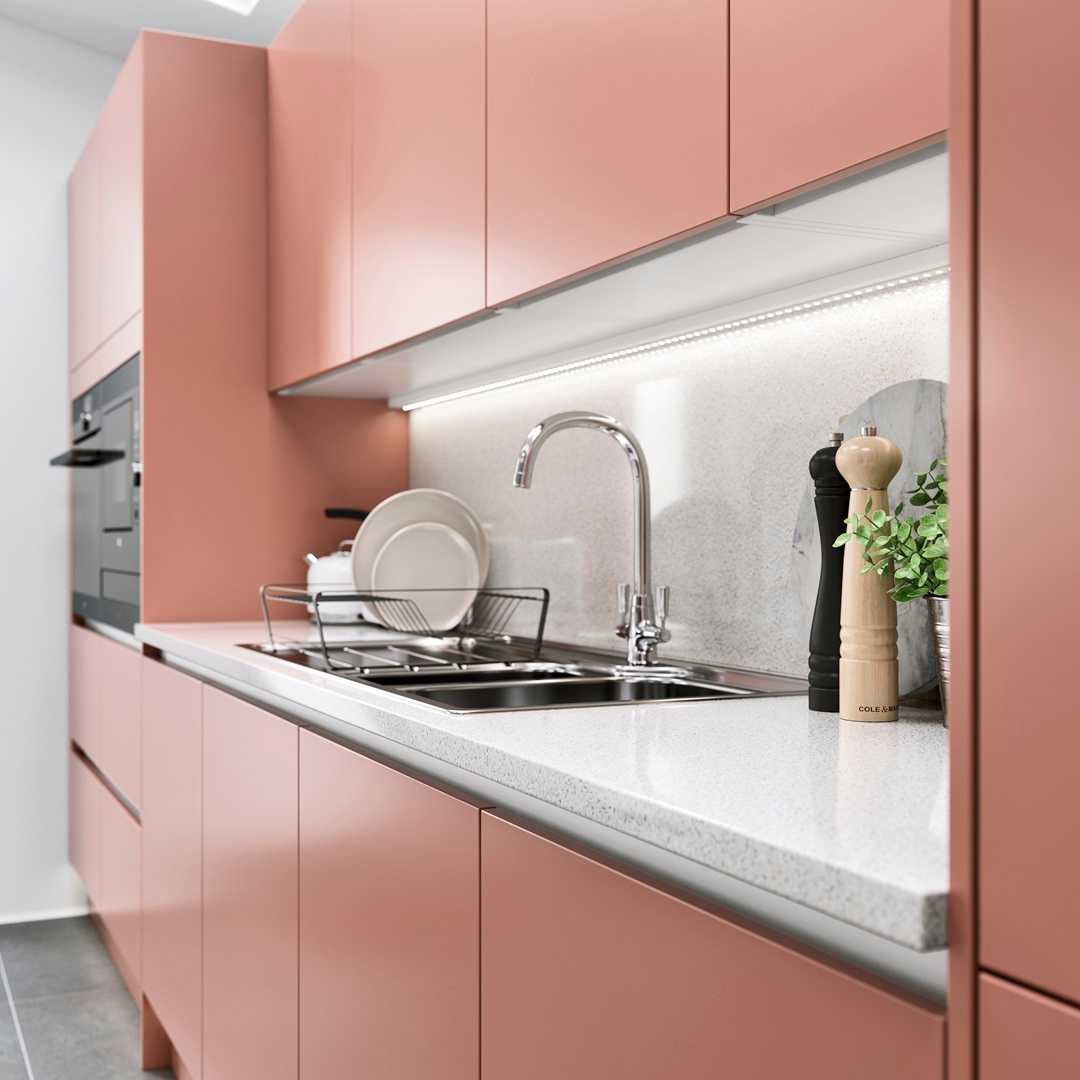
The 1970’s kitchen seen above benefits from a handleless design with its integrated trim handle.
Again, this is a look which still holds true today although largely being reinvented to a J groove door or a handleless kitchen cabinet design that features an integrated profile for opening doors and drawers as shown in our H1 range below
Worktops
The default kitchen worktop in the 1970’s was laminate and a granite worktop was certainly the preserve of the very well off.
Today, laminate worktops are still popular and it’s easy to see why with their ultra realistic decorative patterns.
However, the big change has been in the development of solid surface worktops such as Silestone or similar composite stone which are extremely hard wearing, offer value for money and a huge choice of finishes.
Lighting
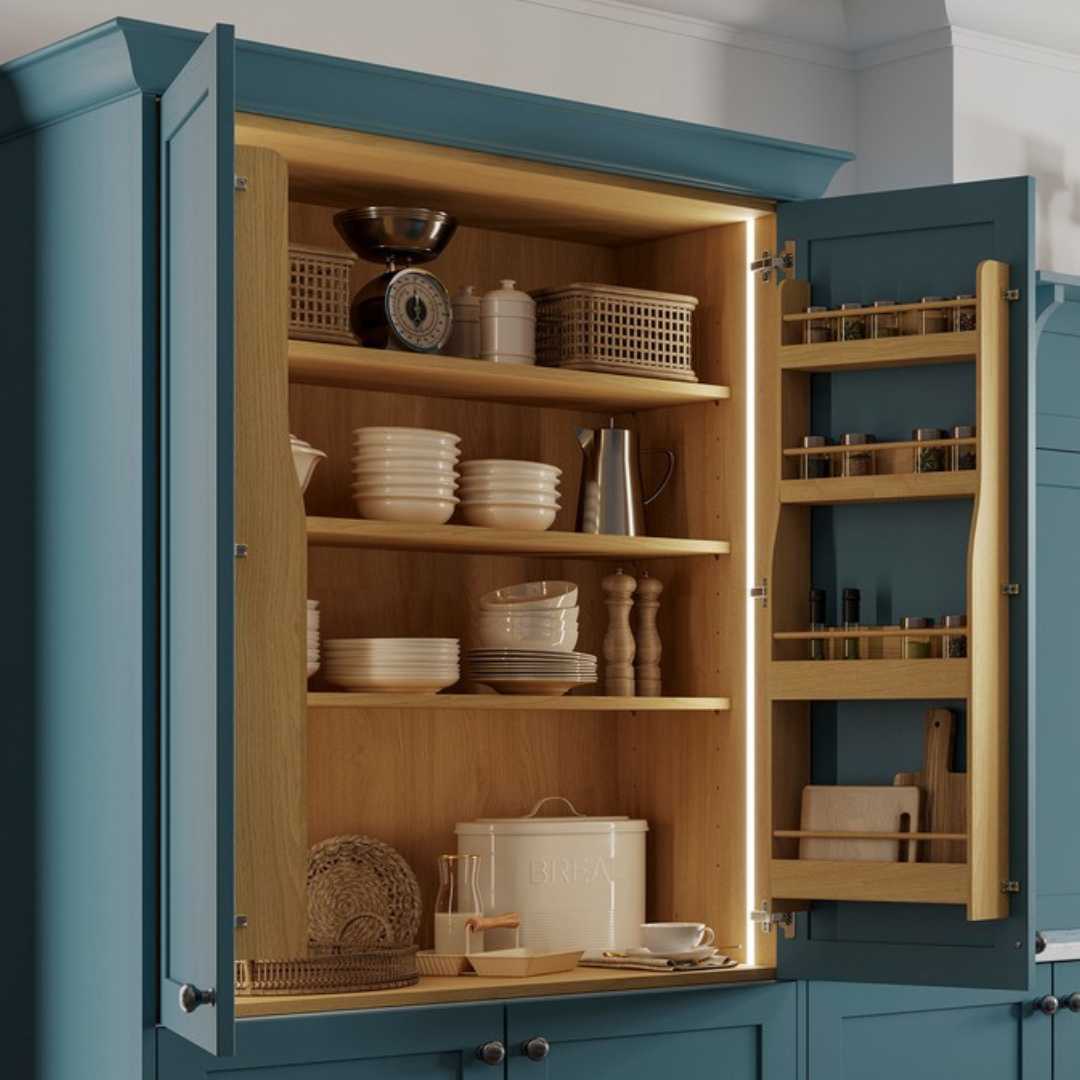
A huge change in kitchens since the 1970’s has been lighting. Typically you’d have had a ceiling fluorescent strip or pendant light and the option to light up individual elements such as under cabinet or inside cabinet simply didn’t exist.
Today, low cost LED lighting has made the kitchen a far more pleasurable place helping to light up worktops to help with kitchen tasks or lighting up a kitchen cabinet to show off the contents or making them easier to find.
Pull-Out Storage
The 1970’s kitchen really consisted of just cupboards and drawers.
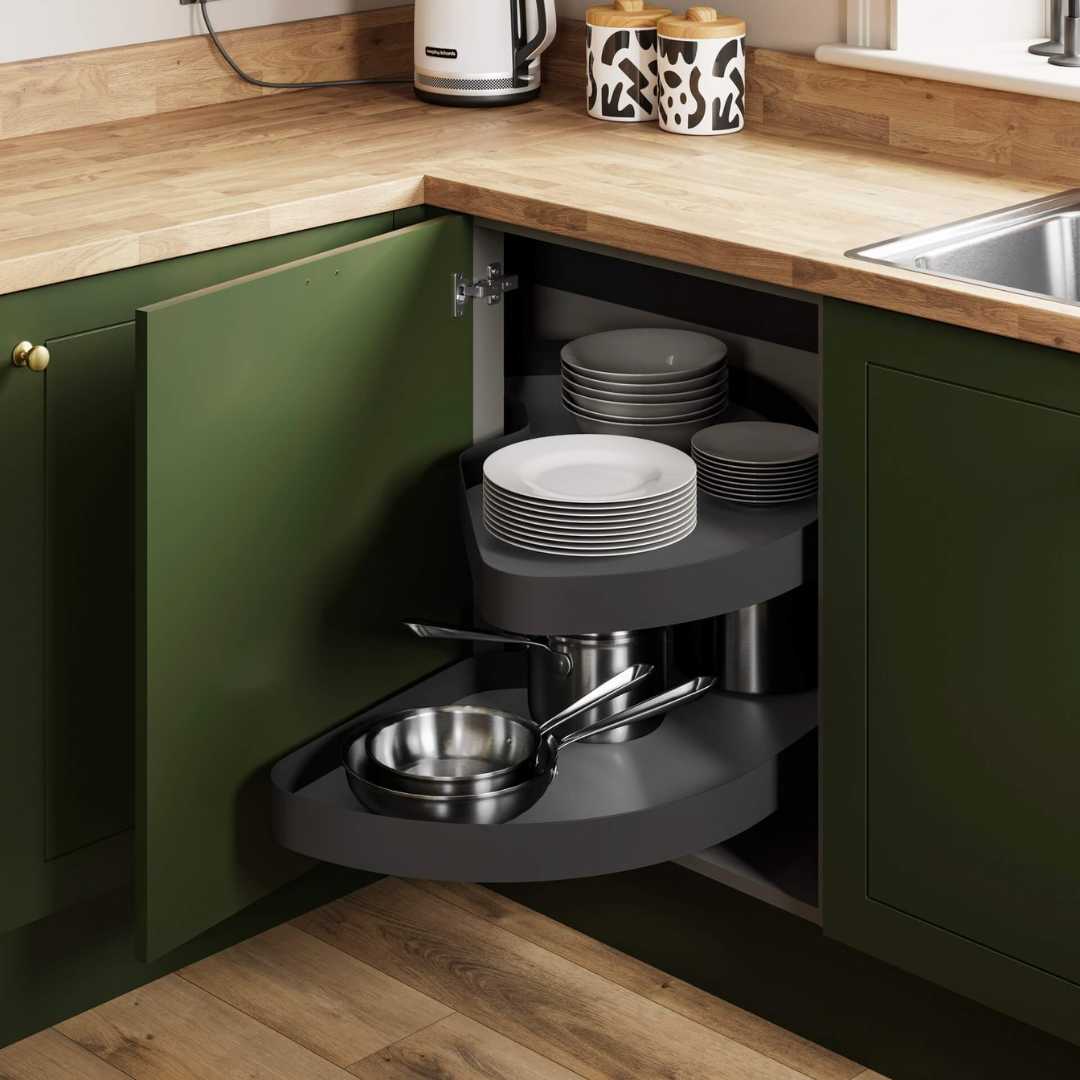
Today’s kitchens are likely to include some elements of pull-out storage which bring the contents out to you for easy access. The most popular areas where we see this is corner storage, base pull out storage and larder storage.
Tiling behind the worktop
1970’s kitchens typically had tiles behind the kitchen hob and a lot of them were brown or beige!
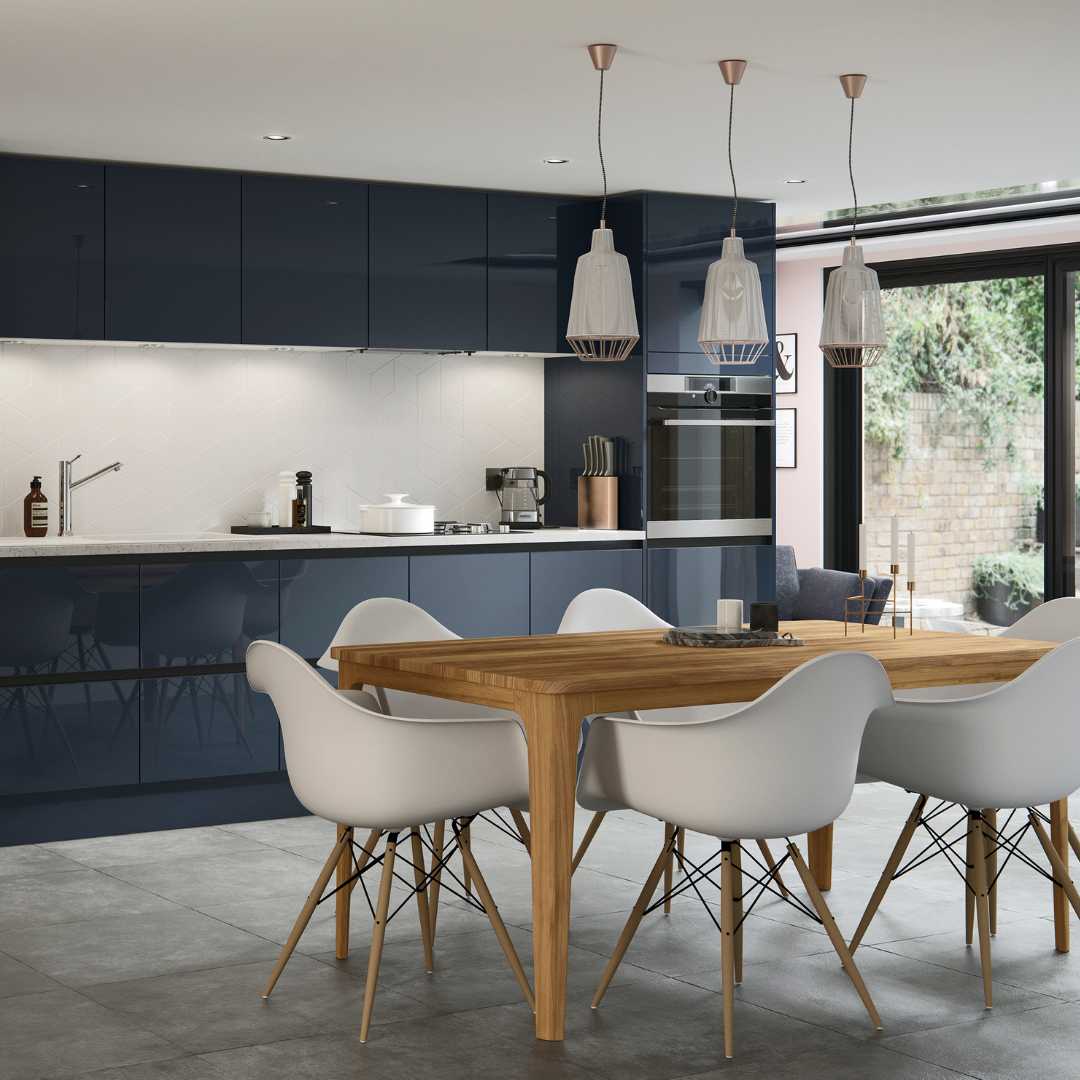
Although tiling in kitchens is still popular behind hobs we’re seeing a lot of acrylic and metallic splashback and wall panels which are easy to install, easy to wipe down and fire resistant. An ideal solution for this is AluSplash, which can even be cut on site.
It’s not all change
As you would expect an awful lot has changed since the kitchen of the 1970’s but we still see many of the same features in today’s modern kitchens. And a well designed kitchen of the 1970’s adhering to the concept of a working triangle of sink, oven and refrigeration is as true today as it was then, even though the décor and cabinetry which holds it all together will be very different.